
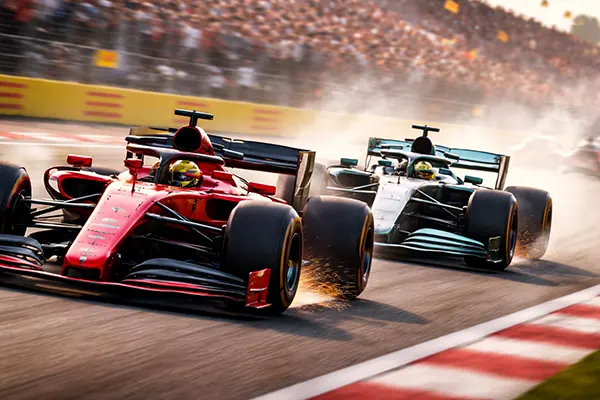
DRS and Future Alternatives: How Formula 1 Is Trying to Improve Overtaking
Overtaking has always been one of the most complex and debated aspects of Formula 1. While technological progress has made cars faster and more efficient, it has also created aerodynamic challenges that make passing increasingly difficult. The Drag Reduction System (DRS), introduced in 2011, was designed as a practical solution, but it has never been universally accepted. Today, the sport is actively exploring new concepts and regulations to improve racing quality without relying too heavily on artificial aids.
The Role of DRS in Modern Formula 1 Racing
DRS was introduced as a response to the growing difficulty of overtaking caused by turbulent air. When a car follows another closely, it loses downforce due to disrupted airflow, making it harder to maintain speed through corners and prepare for a pass. By allowing drivers to open a flap in the rear wing on designated straights, DRS reduces drag and increases straight-line speed, giving the chasing car a measurable advantage.
In practice, DRS has made overtaking more frequent, especially on circuits with long straights. It has helped reduce processional races and added strategic layers, as drivers must manage detection zones and timing carefully. However, the system has also been criticised for making overtakes feel too predictable, with passes often completed before the braking zone rather than through driver skill alone.
Another limitation is that DRS effectiveness depends heavily on circuit design. On some tracks, the advantage is too strong, leading to effortless overtakes, while on others it is barely sufficient to make a difference. This inconsistency has raised questions about whether DRS is a long-term solution or simply a transitional tool in Formula 1’s evolution.
Technical Limitations and Criticism of DRS
One of the main criticisms of DRS is that it artificially alters the competitive balance between cars. Instead of rewarding pure racing ability, it introduces a controlled performance boost that is only available under specific conditions. This can result in overtakes that appear less organic, reducing the sense of competition that many fans expect from Formula 1.
From an engineering perspective, DRS does not address the root problem of dirty air. It merely compensates for its effects on straights, leaving the underlying aerodynamic challenges unresolved. As long as cars struggle to follow closely through corners, the need for such assistance remains.
There are also safety considerations. Although rare, incidents involving DRS misuse or mechanical failure have highlighted the risks associated with moving aerodynamic components. These concerns have encouraged governing bodies to explore alternatives that rely less on active systems and more on fundamental design changes.
New Regulations and Aerodynamic Solutions
The 2022 regulation overhaul marked a significant shift in Formula 1’s approach to overtaking. By introducing ground-effect aerodynamics, engineers aimed to reduce the impact of turbulent air and allow cars to follow more closely. This concept focuses on generating downforce from the floor rather than relying heavily on complex wing structures.
Initial results have shown improvements, with drivers able to maintain closer gaps through corners. This has increased the likelihood of overtaking opportunities without relying solely on DRS. However, the system is not perfect, as teams continue to develop designs that push the limits of airflow management, gradually reintroducing some of the same challenges.
Beyond aerodynamics, Formula 1 is also exploring changes to tyre behaviour and race formats. Tyres that degrade more predictably and encourage varied strategies can create natural overtaking scenarios. Similarly, sprint races and alternative qualifying formats are being tested to increase on-track action across race weekends.
Ground Effect and Its Impact on Racing
Ground effect works by accelerating airflow under the car, creating low pressure that pulls the vehicle towards the track surface. This method generates stable downforce with less sensitivity to turbulent air, making it easier for cars to follow each other closely. As a result, drivers can maintain higher speeds in corners when chasing another car.
However, ground-effect designs introduce their own challenges, such as porpoising, where the car oscillates due to aerodynamic instability. Although teams have largely mitigated this issue, it demonstrates that every technical solution comes with trade-offs that must be carefully managed.
In the long term, refining ground-effect principles could reduce reliance on DRS altogether. If cars can naturally follow and overtake through improved aerodynamics, the need for artificial assistance may diminish significantly.
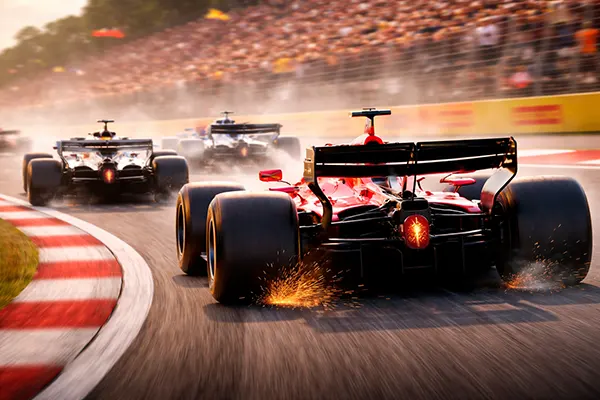
Future Alternatives to DRS in Formula 1
Looking ahead, Formula 1 is considering several alternatives that could replace or complement DRS. One concept involves active aerodynamics, where both front and rear wings adjust dynamically to optimise airflow depending on track conditions. Unlike DRS, which provides a simple drag reduction, these systems could balance performance more naturally.
Another area of development is hybrid power unit deployment. Adjusting how electrical energy is used during races could create strategic overtaking opportunities without altering aerodynamics. Drivers might have more control over when to deploy additional power, adding a tactical dimension to racing.
There is also ongoing discussion about simplifying car designs further to minimise wake turbulence. By limiting certain aerodynamic components, regulators can encourage cleaner airflow and closer racing. This approach aligns with the broader goal of making overtaking a result of driver skill and racecraft rather than external systems.
Balancing Technology and Driver Skill
The challenge for Formula 1 is finding the right balance between technological innovation and sporting integrity. While advanced systems can improve racing, they must not overshadow the role of the driver. Fans and teams alike value overtakes that are earned through positioning, timing, and precision.
Future regulations will likely focus on creating conditions where drivers can battle closely without excessive assistance. This includes refining aerodynamic rules, improving tyre behaviour, and ensuring that energy deployment systems enhance competition rather than dominate it.
Ultimately, the evolution beyond DRS will depend on continuous experimentation and feedback from teams, drivers, and fans. Formula 1 has always adapted to changing technologies, and the pursuit of better overtaking remains central to its identity as a competitive motorsport.
Popular articles
-
 How to Predict Corner Counts Using Te...
Corner markets look simple on the surface, but they’re one …
-
 Preparation for the 2028 Summer Olymp...
The 2028 Summer Olympics in Los Angeles are already shaping …
-
 Champion Wagering Tips Football and b...
Football and baseball are definitely both most preferred sporting activities …