

How to Analyse Tennis Bets in Best-of-Three and Best-of-Five Matches
Tennis betting requires more than simply comparing rankings or recent results. Match format plays a significant role in determining how players perform and how betting markets should be assessed. A best-of-three contest creates different conditions from a best-of-five encounter, affecting stamina, momentum swings, recovery opportunities and statistical reliability. Understanding these differences helps bettors make more informed decisions and avoid common mistakes when evaluating tennis events in 2026.
Why Match Format Changes the Betting Landscape
The first aspect to consider is the amount of time available for a player to demonstrate their superiority. In a best-of-three match, a slow start can be extremely costly because there are fewer sets available to recover. This increases the likelihood of surprises and makes underdog victories more common than in longer formats.
Best-of-five matches generally favour stronger and more experienced competitors. Over a longer contest, technical advantages, physical conditioning and tactical flexibility tend to become more influential. A higher-ranked player has more opportunities to correct mistakes and gradually impose their game.
Historical data from Grand Slam tournaments continues to show that favourites win a larger percentage of best-of-five matches than best-of-three encounters. This does not mean every favourite represents betting value, but it demonstrates how format length influences probability and risk assessment.
Assessing Favourite and Underdog Value
When evaluating favourites in best-of-three events, it is important to examine recent form rather than relying solely on rankings. Players competing in ATP 250 and ATP 500 tournaments often rotate schedules, manage fatigue and experiment with tactics, creating opportunities for lower-ranked opponents.
In best-of-five contests, particularly at Grand Slam events, elite players usually approach matches with greater focus and strategic preparation. Their experience over long battles often becomes evident after the first set, especially against opponents with limited exposure to five-set competition.
Underdogs can still present value in longer matches, but bettors should analyse physical endurance, previous five-set records and recovery patterns. A player capable of competing effectively for four or five hours may offer stronger value than odds alone suggest.
Using Statistics Effectively in Different Formats
Service statistics remain among the most important indicators in tennis betting. First-serve percentage, points won behind the first serve and break-point conversion rates can reveal whether a player possesses the consistency needed for the specific match format.
For best-of-three matches, short-term performance metrics often carry greater weight. A player who has served exceptionally well over the previous month may be able to maintain that level long enough to win two sets, even against stronger opposition.
Best-of-five analysis requires a broader perspective. Long-term consistency, seasonal performance and historical Grand Slam results become more relevant because the match demands sustained excellence over an extended period.
Physical Condition and Recovery Factors
Fitness has become one of the most important analytical variables in modern tennis. The physical demands of the professional tour continue to increase, making recovery time between matches a crucial consideration for bettors.
In best-of-three tournaments, players can often overcome minor physical limitations because matches tend to be shorter. However, signs of fatigue can still influence live betting opportunities, particularly during long rallies or deciding sets.
Best-of-five contests expose physical weaknesses far more clearly. Players carrying minor injuries or lacking match fitness frequently struggle during the later stages of a match. Reviewing previous match durations, medical time-outs and recent tournament schedules can provide valuable insight before placing a bet.
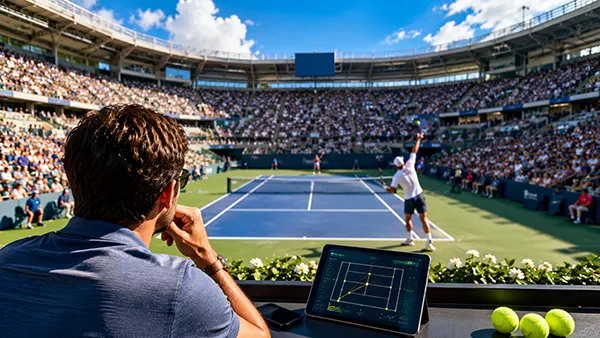
Building a Practical Betting Strategy for 2026
A successful tennis betting strategy should always account for tournament level and match format. ATP and WTA Tour events are predominantly best-of-three, while men’s Grand Slam singles matches remain best-of-five. Applying identical analytical criteria to both formats can lead to inaccurate conclusions.
Many experienced bettors now combine traditional statistics with advanced performance data available through official tennis tracking systems. Metrics such as return depth, rally tolerance and pressure-point success rates can provide a more complete picture than basic win-loss records.
Market movement should also be monitored carefully. Significant odds changes before a match may reflect information about player fitness, scheduling concerns or weather conditions that have not yet been fully recognised by the wider betting market.
Common Mistakes to Avoid
One frequent mistake is assuming that recent victories automatically indicate betting value. The quality of opposition, court surface and match format should always be examined before drawing conclusions from a winning streak.
Another error is ignoring endurance differences. Some players excel in short, explosive contests but struggle when required to maintain intensity for several hours. This distinction becomes particularly important during Grand Slam tournaments.
Finally, bettors should avoid focusing exclusively on rankings. Modern professional tennis is highly competitive, and ranking positions do not always reflect current form. Combining statistical analysis, physical assessment and format-specific factors creates a more balanced approach to evaluating both best-of-three and best-of-five matches.
Popular articles
-
 Bobby Hull: bending his own!
The top personalities in hockey have a defining characteristic. No …
-
 Strategies for Sports Betting on Poker
Poker, a game of skill, strategy, and psychological warfare, has …
-
 UCI Road World Championships 2024 in ...
The UCI Road World Championships 2024, scheduled from September 21 …