
Bundesliga Coaching Changes in the 2025–2026 Season: Who Replaces Whom and What to Expect
The Bundesliga has long been known for tactical experimentation, intense competition and a willingness among clubs to make decisive managerial changes when results fall short of expectations. The 2025–2026 season continues this tradition. Several clubs have already parted ways with head coaches during the campaign, while others have restructured their technical staff in search of improved performances. Coaching departures in Germany are rarely just reactive decisions. They often reflect broader strategic shifts involving youth development, pressing systems and financial sustainability. Understanding why these changes happen and who takes charge afterwards provides useful insight into the direction of Bundesliga football.
Why Bundesliga Clubs Change Coaches Mid-Season
Managerial turnover in the Bundesliga is rarely triggered by a single defeat. German clubs generally evaluate performance through several metrics including expected goals, pressing intensity, squad development and consistency against direct rivals. When these indicators stagnate over several months, boards begin reassessing the head coach’s long-term compatibility with the club’s sporting project.
Financial considerations also influence decisions. Unlike some European leagues where ownership structures allow aggressive spending, many Bundesliga clubs operate under the 50+1 ownership model. This framework encourages responsible financial planning, meaning that missing out on European competition can significantly affect revenue projections. Coaching changes therefore sometimes occur before the winter break in order to stabilise league position.
Another important factor is tactical identity. German football culture places strong emphasis on organised pressing, quick transitions and physical intensity. When a team’s style begins to drift away from these expectations, supporters and club directors often push for a new managerial direction that better aligns with Bundesliga traditions.
Pressure from Performance Data and Fan Expectations
Modern Bundesliga clubs rely heavily on analytical departments. Performance analysts monitor defensive spacing, ball progression speed and pressing triggers across every match. If data suggests that tactical patterns are declining, management may act before results collapse completely. In several recent seasons, coaches were replaced even while their teams remained in mid-table positions.
Supporter culture also plays a role. German football is deeply connected with local communities, and fans maintain strong influence through membership structures. When stadium atmosphere turns critical over extended periods, club leadership sometimes interprets it as a signal that the sporting project requires adjustment.
Finally, player development expectations add another layer of pressure. Bundesliga clubs are internationally respected for producing young talent. If promising players stagnate or fail to integrate into the first team, decision-makers may look for a coach with stronger development credentials.
Key Coaching Departures During the 2025–2026 Bundesliga Campaign
During the current season several clubs have already made managerial changes. One of the most discussed departures occurred when a mid-table side struggling with defensive organisation replaced its head coach after a series of matches conceding multiple goals. The club leadership emphasised the need for structural stability rather than purely attacking football.
Another case involved a team fighting to avoid relegation. After a difficult start to the campaign, the board decided to appoint a coach experienced in short-term rescue missions. This approach is relatively common in Germany, where some managers have built reputations specifically around stabilising clubs in dangerous league positions.
Meanwhile, one European qualification contender parted ways with its coach despite respectable results. The decision followed internal disagreements regarding transfer strategy and squad rotation. Situations like this illustrate that managerial departures are not always linked directly to league standings.
New Coaches and Their Tactical Profiles
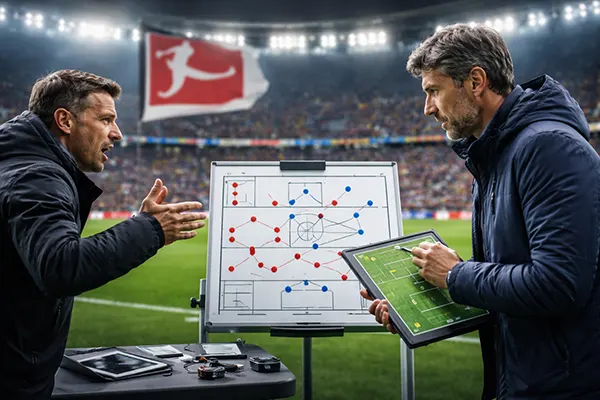
The replacements chosen by Bundesliga clubs tend to reflect clear tactical intentions. In several recent appointments clubs have prioritised coaches known for structured pressing systems and high defensive lines. These tactical approaches remain closely associated with the Bundesliga identity established during the past decade.
Some teams have opted for younger managers who previously worked within club academies or assistant roles. Promoting internally can help maintain continuity in playing philosophy while also reducing adaptation time for players familiar with the system.
Other clubs have turned to experienced managers from neighbouring European leagues. These appointments often aim to introduce alternative tactical ideas, such as controlled possession structures or hybrid formations that combine back-three and back-four defensive shapes.
What These Coaching Changes Mean for the Rest of the Season
Mid-season managerial appointments can quickly alter the competitive balance of the Bundesliga. New coaches typically introduce adjustments to defensive organisation and pressing triggers within their first weeks. Even modest improvements in these areas can translate into important points during the tightly contested middle section of the table.
Another consequence is increased competition within squads. Fresh coaching staffs often reassess player roles, offering opportunities to footballers who previously received limited minutes. This internal competition sometimes revitalises teams that had become predictable under previous tactical structures.
From a broader league perspective, coaching changes contribute to the Bundesliga’s reputation for unpredictability. Clubs fighting for European qualification or attempting to avoid relegation frequently experience performance swings after managerial transitions.
Long-Term Impact on Bundesliga Tactical Trends
Looking beyond the current season, managerial turnover influences how Bundesliga football evolves tactically. Coaches arriving with innovative pressing structures or flexible build-up patterns often inspire tactical adjustments across the league as opponents adapt.
Younger German coaches continue gaining opportunities, reflecting the country’s strong coaching education system. Many of them bring detailed positional play concepts combined with aggressive defensive organisation, maintaining the Bundesliga’s identity as one of Europe’s most tactically progressive leagues.
If current trends continue, the coming seasons may see even greater emphasis on hybrid tactical systems. Coaches are increasingly combining traditional high pressing with more controlled possession phases, creating teams capable of adapting to different match scenarios throughout a long Bundesliga campaign.
Popular articles
-
 How to dress for cross-country skiing...
As the old Scandinavian saying goes, “There is no such …
-
 Asian handicap in sports betting
The Asian Handicap is a type of betting used in …
-
 Exploring the Excitement of the IIHF ...
The IIHF World Championship stands as a pinnacle of international …